
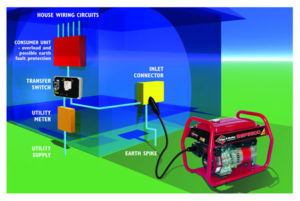
 If you own a generator and have it wired into your home, you must have a break-before-make transfer switch to prevent electricity from feeding back on your service line and possibly injuring Jefferson Energy employees who are trying to restore your power.
Portable Generators – Use Them Safely!
We recognize the worth of portable electric generators, but they need to be used wisely. Portable electric generators can be hazardous if used improperly. Some of the hazards are:
- carbon monoxide poisoning from the engine exhaust
- electrocution from improper connections of the generator into the electrical wiring system.
Remember to always follow the direction provided by the manufacturer as well as your local electrical inspection agency and a licensed electrician. Never operate these devices except as intended by the manufacturer. Follow these general precautions to protect against carbon monoxide poisoning:
- Never use a generator indoors or in attached garages. Proper ventilation is essential.
- Only operate the generator outdoors in a well-ventilated, dry area, and keep the exhaust away from air intakes to the home, and keep the unit protected from direct exposure to rain and snow, preferably under a canopy, open shed or carport.
Follow these precautions to avoid electrical accidents:
- Plug individual appliances into the generator using heavy duty, outdoor-rated cords with a wire gauge adequate for the appliance load.
- Observe the generator manufacturer’s instructions for safe operation.
- Do not plug the generator into a wall outlet.
- If it is necessary to connect the generator to the house wiring, always use a qualified electrician to properly install the standby electrical generator system.
If connection into the house wiring is desired to operate permanently wired equipment, such as water pump, furnace blower/controls, room lighting, etc., there are important steps that require the utmost care to avoid electrocution.
- Have a qualified electrician install a break-before-make transfer switch. A transfer switch, normally supplied by the electrician, permits transfer of the load from the household power source over to the portable generator. The transfer switch should be certified by UL or other independent test lab for this application and be mounted within an electrical enclosure. Transfer switches and related accessories designed for connecting a standby system are available from electrical supply stores.
- When properly installed, the transfer switch will isolate the circuits supplied by the generator from those normally supplied by the utility. This prevents inadvertently energizing circuits in both systems and reduces the possibility of electrocution resulting from contact with conductors presumed to be de-energized.
- Do not operate more appliances and equipment than the output rating of the generator.
- Automatic transfer switches are a convenient way to connect backup power to your home. Various options exist to help accomplish this. Any automatic transfer switch solution that involves an addition to the meter socket must be approved by Jefferson Energy. As a result of our approval process, the GenerLinkTM transfer switch is not permitted for use on Jefferson Energy’s system.
- And remember! do not store gasoline in the home. Gasoline, kerosene and other flammable liquids should be stored outside of living areas in properly labeled, non-glass safety containers. They should not be stored in a garage that has a fuel-burning appliance. The vapor from gasoline can travel invisibly along the ground and be ignited by pilot lights or arcs caused by activating electric switches.
Portable generators – What would we do without them during extreme power outages? An equally important question is: Do you know what to do with them? Follow the safety precautions and Be Safe!